May 23, 2026
After-Hours Lead Capture: A Saturday Night Walkthrough
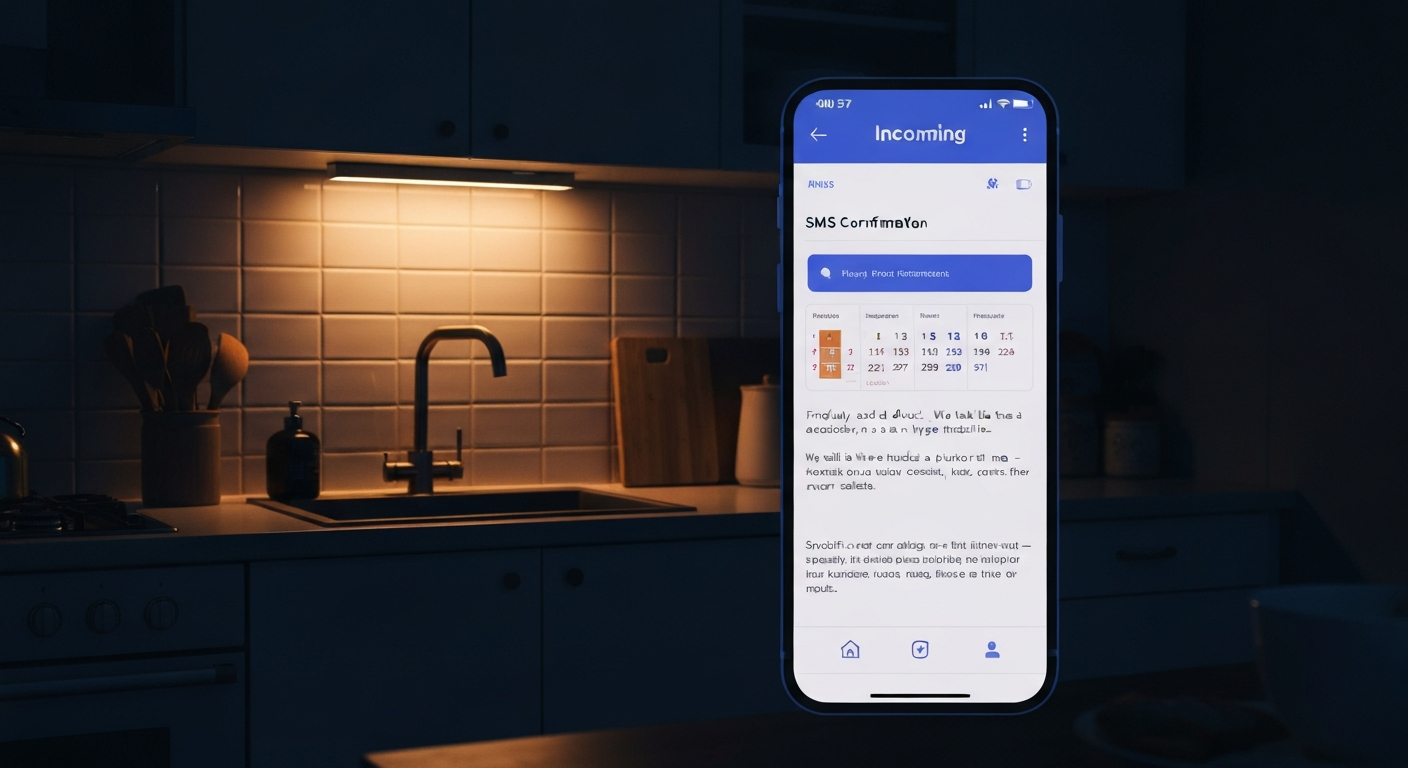
It's 10:04 PM on a Saturday in Vancouver. A homeowner in Kitsilano walks into her kitchen, hears the drip, and looks under the sink — a slow but steady leak from the supply line. She grabs her phone, searches "emergency plumber Vancouver," and lands on a trades site. She fills out the contact form.
Here's what happens next, minute by minute. If you run a 10-person trades shop, this is the gap between a booked job on Sunday morning and a voicemail your tech finds on Monday.
10:04 PM — Form submitted
She hits submit. The form skill catches the payload — name, postal code, phone, a one-line description ("leak under kitchen sink, getting worse"). No human is involved. The owner is at his daughter's hockey tournament. His office manager logged off Friday at 5.
In a no-follow-up world, this lead sits in an inbox until Monday at 8 AM. By then she has called three competitors and booked one of them. Per Velogics aggregate data, leads with no follow-up system convert at around 8%.
10:04:47 PM — SMS out
Forty-seven seconds after submission, she gets a text. Not a generic "we got your message" auto-reply — a personalized SMS referencing the leak, asking if she'd like a callback now or prefers to schedule. The 47-second figure is our benchmark across customers; the manual industry average is closer to four hours.
She taps "call me now."
10:05 PM — AI voice picks up
The voice skill calls her. It identifies itself as an AI assistant for the business (this matters — TCPA compliance is non-negotiable, and every voice agent we ship identifies itself). It asks three qualifying questions:
- Is the water shut off, or still flowing?
- Is it pooling on the floor or contained?
- Are you okay with an emergency-rate visit tonight, or would tomorrow morning work?
She says it's contained, she shut the valve, and tomorrow morning is fine. The voice agent quotes a standard Sunday call-out window — 8 to 10 AM — and offers two slots.
10:07 PM — Calendar booked
She picks 8:30 AM. The voice skill writes the appointment directly into the business's calendar (Google Calendar, in this case, though the same flow works with Jobber, ServiceTitan, or Acuity). It sends her a confirmation SMS with the address logic, the tech's name, and a cancellation link.
Total elapsed time: three minutes. The owner's phone never rang.
10:08 PM — Logged and quiet
The conversation transcript, the call recording, the form data, and the calendar event all land in the operator portal. The owner can review every word the AI said in the morning. No black box — that's the point. If the AI mishandled anything, he'll see it before the tech arrives.
She goes to bed. He's still at the rink.
7:45 AM Sunday — The morning summary
The owner wakes up to a single notification: one new booking overnight, $340 estimated job value, customer pre-qualified, tech routed. He glances at the transcript over coffee, sees nothing weird, and texts his on-call tech the address. Done.
This is the part operators underestimate. It's not just that the lead got captured — it's that the owner spent zero minutes on it. No 11 PM phone triage. No "hey honey, I have to take this." The job shows up on the schedule the same way a payroll deposit shows up in the bank: handled.
Why the numbers work
Across Velogics customers, leads handled by an AI employee end-to-end convert at roughly 68%, versus a 21% industry average and 8% with no follow-up at all. Two things drive that:
Speed. First responder wins. In emergency trades work, 78% of jobs go to whoever calls back first. Forty-seven seconds beats four hours every time.
Qualification. The voice skill isn't just booking — it's asking the right three questions for the trade. An HVAC after-hours call gets different questions than a plumbing leak or a roofing inquiry after a windstorm in Ottawa. Each skill has its own playbook. Voice doesn't act like chatbot doesn't act like form.
What this isn't
It isn't a chatbot bolted onto a website. It isn't a generic GPT wrapper that hallucinates pricing. It isn't a tool the owner has to learn — there's no dashboard to babysit, no prompts to tune. The form skill, the SMS responder, and the voice skill are three separate AI employees working in sequence, each billed à-la-carte, each with its own metrics in the operator portal.
If you only need the voice skill because your forms are already handled, hire that one. If your bottleneck is the form-to-SMS gap, start there and add voice later. The Vancouver plumber in this walkthrough started with the form skill, added voice two months in, and now runs both.
The honest gap
If you're skeptical, the right question isn't "does this work?" — it's "does this work for my trade, in my market, with my call volume?" Ottawa trades businesses see different after-hours patterns than Vancouver ones. Med-spas and dental practices have different qualification logic than HVAC. The 47-second and 68% figures are aggregates; your numbers will be your numbers.
That's what a demo is for. We run yours on real scenarios from your business, not a generic script.
Velogics builds à-la-carte AI employees for service businesses. Hire one — form, voice, chatbot, winback, or any of the others — and see your own version of the Saturday-night walkthrough at velogics.ai.
Results vary by business. Velogics AI employees augment your team — they don't replace human judgement on bookings, legal matters, or sensitive customer issues.
See Velogics respond in under 60 seconds
Book a free demo and watch your AI answer, qualify, and book a lead — live. No commitment, no credit card.